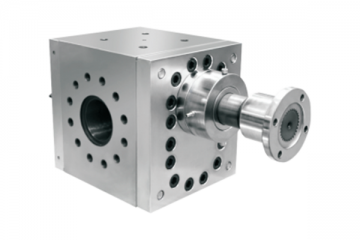
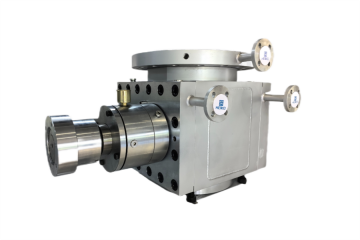
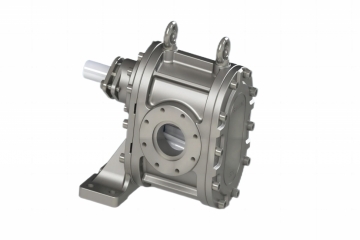
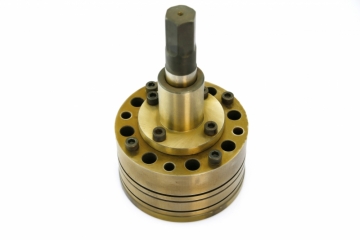
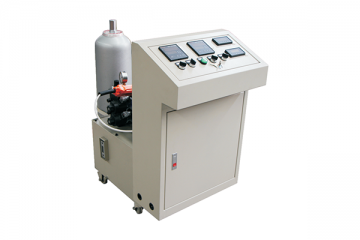
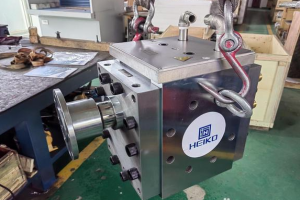
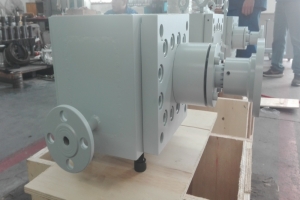
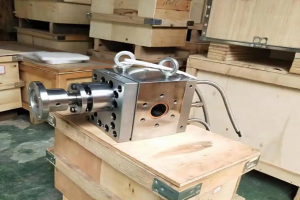
Fluoroplastics (fluoropolymers) including PFA, PVDF, FEP, ETFE and modified PTFE stand out for outstanding chemical inertness, high-temperature resistance, low friction and excellent dielectric properties. However, their special melt characteristics — high viscosity, weak self-lubrication, corrosive decomposition gas and narrow processing temperature window — bring big challenges to conventional extrusion metering. A dedicated fluoroplastic melt pump (gear-type melt metering pump) stabilizes die pressure, suppresses extruder surge and delivers consistent melt output, which is indispensable for high-quality fluoropolymer finished productsXaloy.
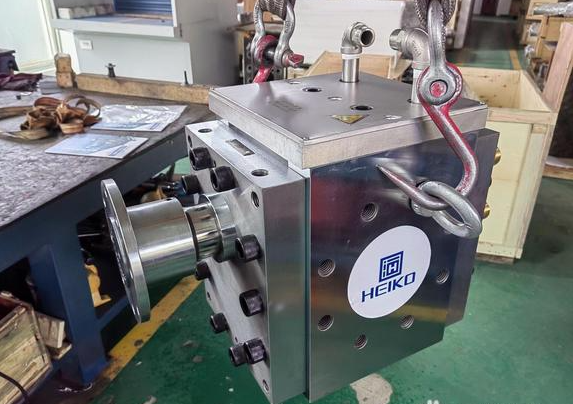
Typical Application Scenarios of Fluoroplastic Melt Pumps
1. Wire & Cable Fluoropolymer Insulation and Sheathing
This is the largest mature application. Melt pumps meter FEP, PFA and ETFE melt for high-temperature wire insulation, aerospace cables, electric vehicle wiring and communication cable jackets. Steady flow controls insulation thickness tolerance, avoids pinholes and guarantees dielectric stability under long-term high-temperature and chemical exposure.
2. Fluoroplastic Film, Sheet & Thin Wall Tube Extrusion
PVDF, FEP and PFA film, solar backsheet, corrosion-resistant lining sheet, ultra-thin capillary and chemical delivery tubing require strict gauge uniformity. The melt pump isolates screw pressure fluctuation, reduces film thickness deviation and improves surface smoothness; it is widely used in semiconductor ultra-pure piping, laboratory fluid tubing and corrosion-resistant hose production.
3. Chemical & Corrosion-Resistant Profile Extrusion
Used for PVDF/PFA molded profiles, valve lining, pipe fittings and anti-corrosion structural parts. During processing, fluoropolymer may release corrosive volatiles. Specially alloy-wetted melt pumps prevent corrosion, maintain long-run metering precision and reduce shutdown frequency for chemical processing lines.
4. High-Purity & Medical-Grade Fluoroplastic Products
Medical PFA tubing, biopharmaceutical fluid transfer components and semiconductor ultra-clean fluoropolymer parts demand zero contamination. The melt pump with high-purity heat treatment and non-staining alloy wetted parts avoids metal precipitation and meets clean production requirements for medical and electronic-grade fluoroplastics.
5. Compounding, Pelletizing & Masterbatch with Fluoropolymer
For fluoroplastic compounding, filled PVDF and fluorine-based masterbatch pelletizing, melt pumps deliver stable feeding to underwater or strand pelletizing systems. Consistent throughput stabilizes pellet size and improves batch consistency, especially for formulations with glass fiber, carbon or mineral fillers that cause wear.
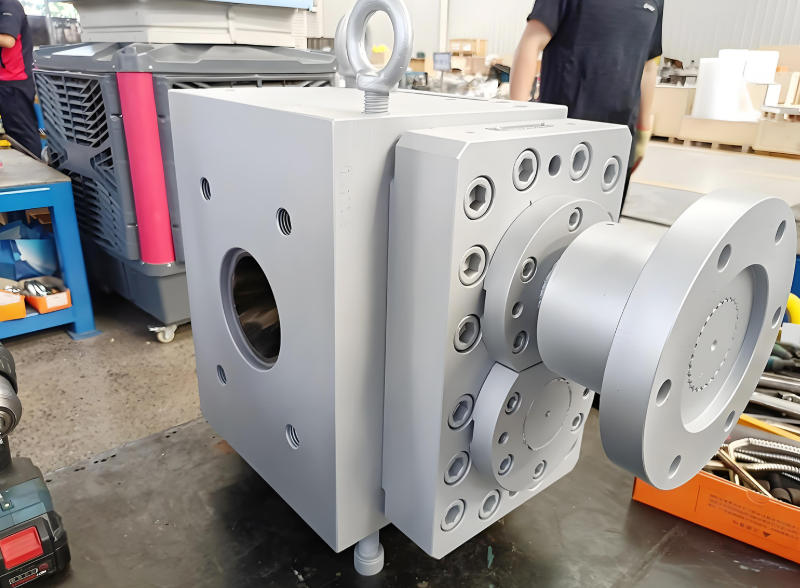
Core Selection Points for Fluoroplastic Melt Pumps
1. Wetted Material Matching (Most Critical)
Standard 4140 or common stainless steel melt pumps cannot work for fluoroplastics. Select high-temperature corrosion-resistant superalloys such as Hastelloy, Inconel or customized nickel-based alloy for gears, shafts and pump body.
PVDF / ETFE: Medium corrosion, nickel-based alloy is preferred
FEP / PFA: Higher processing temperature and corrosive gas, premium superalloy + precision heat treatment
Filled fluoroplastics (carbon, glass fiber): Add hard surface coating (Stellite or DLC) for anti-wear Avoid ordinary stainless steel; corrosion pitting will cause flow drift and metal contamination.
2. Processing Temperature, Viscosity & Shear Suitability
Fluoropolymers have narrow processing windows: PVDF approx 180–240°C, FEP/PFA up to 300–380°C.
Confirm continuous working temperature of the pump body, heating jacket and sealing system
Low-shear pump profile is required: excessive shear leads to melt degradation, bubble generation and material carbonization
For ultra-high viscosity modified fluoroplastics, choose larger gear clearance and low-speed design to reduce overheating
3. Throughput, Displacement & Pressure Rating
Size pump displacement (cc/rev) based on your actual line output, keep the normal working speed in 30%–70% of rated speed for best stability, do not run near maximum speed continuously.
Check differential pressure (ΔP): fluoroplastic extrusion often runs with high die backpressure. Verify pump’s allowable inlet/outlet pressure difference, bearing load and sealing capacity under long high-pressure operation. Too small displacement causes over-speed, too large displacement leads to poor low-flow control.
4. Adaptation to Filled / Reinforced Formulations
If your formula contains carbon fiber, glass fiber, graphite or mineral fillers, wear becomes the main failure mode. Upgrade gear surface hardening, use wear-resistant bearing pairs and avoid soft alloy versions designed for unfilled clean fluororesin.
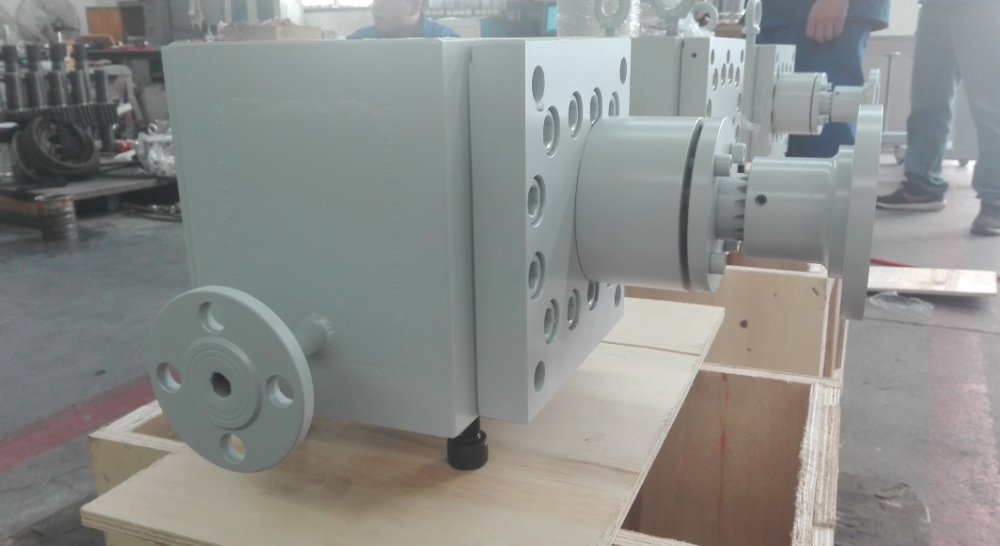
Fluoroplastic melt pumps are not universal polymer gear pumps. Correct selection starts from the fluoropolymer grade, filler content and purity requirement, then confirms alloy material, temperature rating, differential pressure, shear design and sealing scheme. A well-matched melt pump cuts scrap rate, tightens dimensional tolerance and extends continuous running time for fluorine film, cable, tubing and chemical profile extrusion lines.