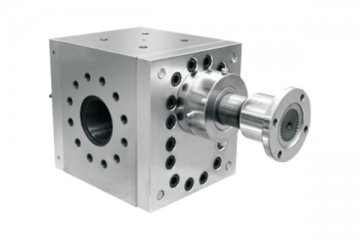
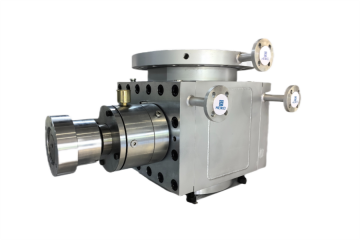
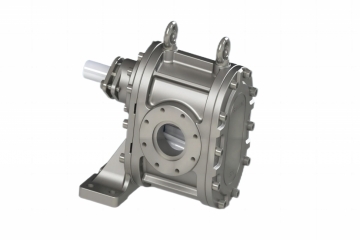
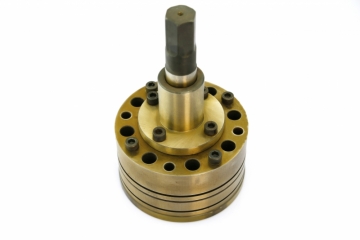
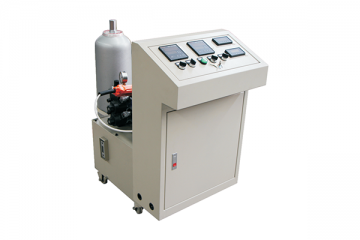
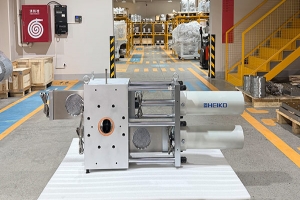
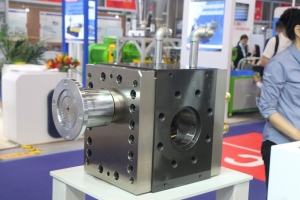
Common screen changers can be broadly classified into two categories based on their structural design: plate-type and column-type.
In a plate-type screen changer, the core filtration unit is mounted on a sliding plate, and the screen is changed by moving the plate. Common configurations include single-plate single-station, single-plate dual-station, and dual-plate dual-station.
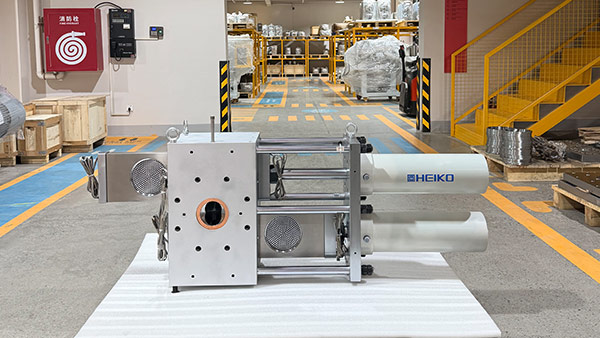
Plate-type structures are typically more straightforward, with a clear design and relatively easy maintenance; they are commonly used in thermoplastic production lines for sheet, plate, pipe, profile, blown film, and pelletizing applications.
In column-type screen changers, the core filtration unit is mounted within a plunger or sliding column structure, and screen changes are accomplished by moving the plunger. Common configurations include single-column circular, single-column oblong, double-column circular, double-column oblong, double-column arched, double-column cylindrical, double-column four-station, and backflush designs.
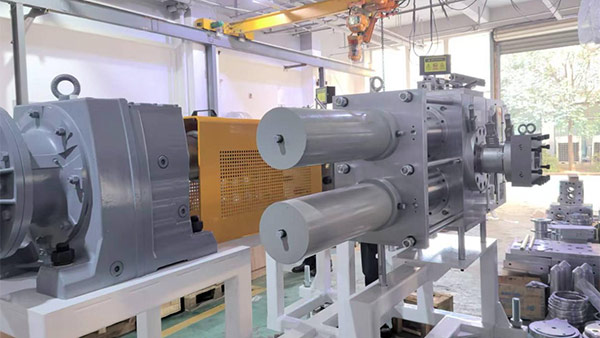
Column-type designs place greater emphasis on seal reliability, flow path continuity, and stability during screen changes, making them suitable for applications with higher demands for pressure stability, continuous production, flow path cleanliness, and seal reliability.
However, there is no absolute superiority between plate-type and column-type designs; the key factor is the specific operating conditions.
If the production line does not have high requirements for continuity and the screen-changing frequency is low, a simple plate-type design can meet the needs.
If the production line has higher requirements for stability during the screen-changing process, sealing, and flow channel design, the column-type design offers greater advantages.