In the field of polymer processing, extrusion molding is one of the most fundamental production processes, widely used in the manufacture of products such as pipes, sheets, films, profiles, and cable jackets. However, traditional extruders face a common technical challenge during actual operation: pressure fluctuations and unstable flow rates.
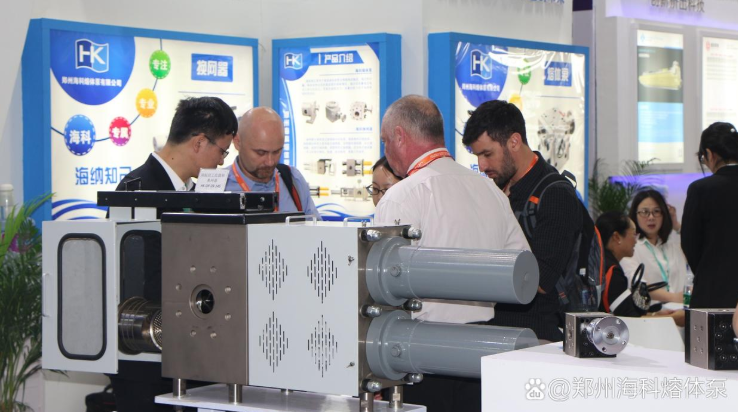
In traditional extrusion processes, the extruder must perform three tasks: solid feeding, melting and plasticizing, and metering and pressurizing. The problem is that when die resistance is high (e.g., due to high-viscosity materials or fine filters), the screw metering section must generate high pressure to achieve conveyance, which leads to two side effects:
Increased backflow: Under high pressure, backflow and leakage of the melt within the screw grooves intensify, reducing actual conveyance efficiency.
Surge in shear heat: Severe shear forces cause the melt temperature to rise, making temperature control more difficult and potentially triggering thermal degradation.
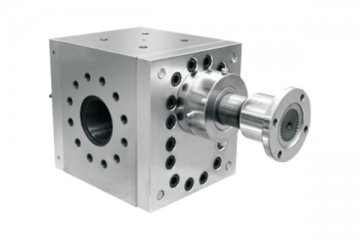
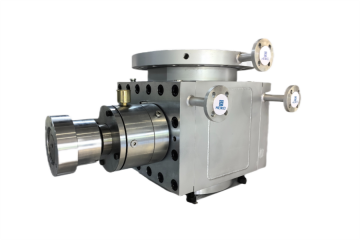
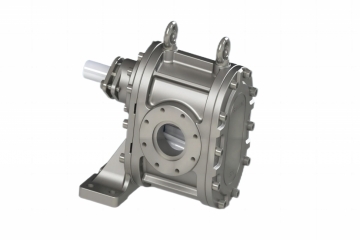
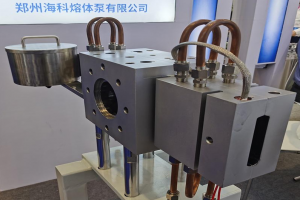
By integrating a melt pump into the system, the extruder primarily handles plasticization, initial compression, and feeding, while the core tasks of establishing stable die pressure and precise metering are transferred to the melt pump. This effectively adds a “pressure isolator” and “flow meter” to the system, thereby achieving:
Pressure decoupling: Fluctuations in die pressure no longer directly affect the stability of the extruder’s output.
Flow linearization: By precisely controlling the pump speed via a variable frequency drive, near-linear, high-precision flow regulation is achieved.
Energy consumption transfer and optimization: Since the melt pump handles the primary pressure-building function, it significantly reduces the load on the extruder screw (typically by 10%–30%), allowing the extruder to operate within a more optimal torque-speed range and thereby reducing overall system energy consumption.
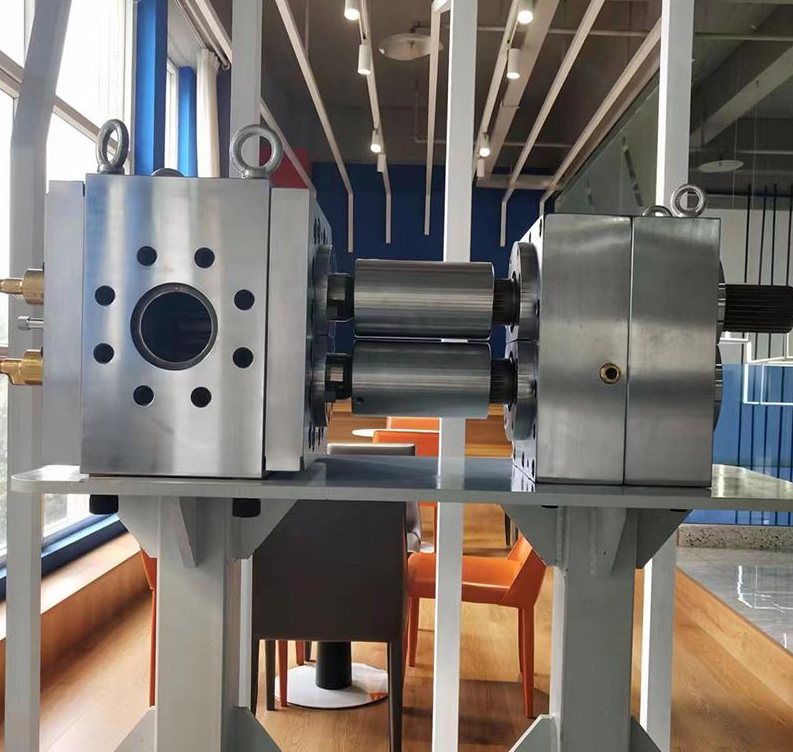
Different extrusion processes have varying requirements for matching melt pumps with extruders. Based on actual production scenarios, we will focus on analyzing three typical applications:
1. PVC Pipe/Sheet Extrusion: Suitable for Heat-Sensitive Materials
PVC is a heat-sensitive polymer with a narrow processing window (temperature fluctuations exceeding ±2°C can easily cause degradation). It also has high melt viscosity and is sensitive to shear. The key matching criteria are “low shear, stable temperature, and degradation prevention”:
The extruder must be equipped with a low-shear screw to reduce the risk of melt degradation; the melt pump must feature an optimized flow path design to minimize dead zones and shear-induced heat generation, while strictly controlling temperature (≤350°C) and pressure fluctuations. For example, in PVC sheet production lines, the use of high-precision melt pumps can effectively resolve issues such as uneven product thickness and yellowing of the surface.
2. PET/PA Synthetic Fiber Spinning: Meeting High-Precision Metering Requirements
The spinning process demands extremely high uniformity in melt flow rate (single-filament diameter deviation must be controlled within ±0.1 mm). The key focus is on “precise metering and pulsation-free delivery”:
The extruder must ensure uniform melt plasticization and prevent contamination; the melt pump must utilize high-precision gears (meshing clearance ≤0.1 mm) to ensure flow stability, while also providing adequate pressure-boosting capacity to meet the pressure requirements of the spinning die (typically 20–35 MPa).
3. Biodegradable Material (PBAT/PLA) Extrusion: Adapting to a Wide Viscosity Range
The melt viscosity of biodegradable materials fluctuates significantly (1–10,000 Pa·s) and is prone to thermal degradation. The key focus for system matching is “wide adaptability and stable pressure”:
The extruder must have flexible speed control capabilities to adapt to viscosity changes; the melt pump must have a wide viscosity adaptability range and be paired with melt homogenization equipment to ensure uniform melt composition and temperature, thereby preventing sudden pressure changes during conveyance.
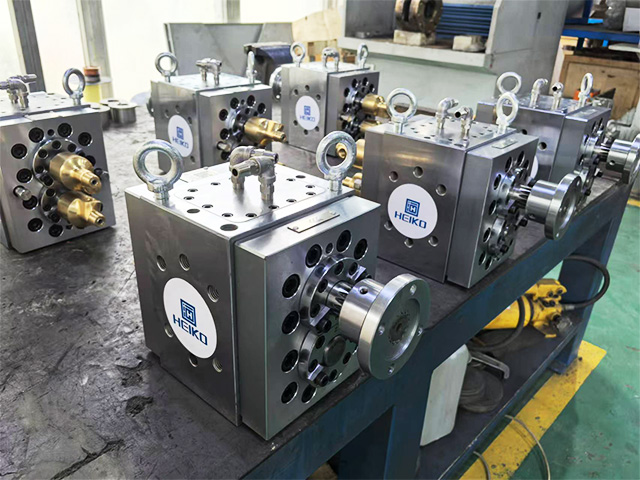
To address the challenges of matching melt pumps with extruders, a three-pronged approach is required: “selection and matching, equipment optimization, and system integration.” Zhengzhou Heiko Machinery Co., Ltd. provides one-stop matching solutions tailored to the process requirements of different industries, enabling equipment to work in concert to achieve optimal performance.