Many production sites encounter the following issues: black spots or crystalline defects suddenly appear on the film surface, forcing the entire roll of product to be downgraded; on the pelletizing line, the pressure gauge needle fluctuates constantly, resulting in pellets of inconsistent sizes; in the worst cases, the machine must be shut down every two or three hours to change the screen, leaving less than half of a shift’s time available for actual production. These issues may seem diverse, but if we trace them back to their root cause, many point to the same critical step: melt filtration.
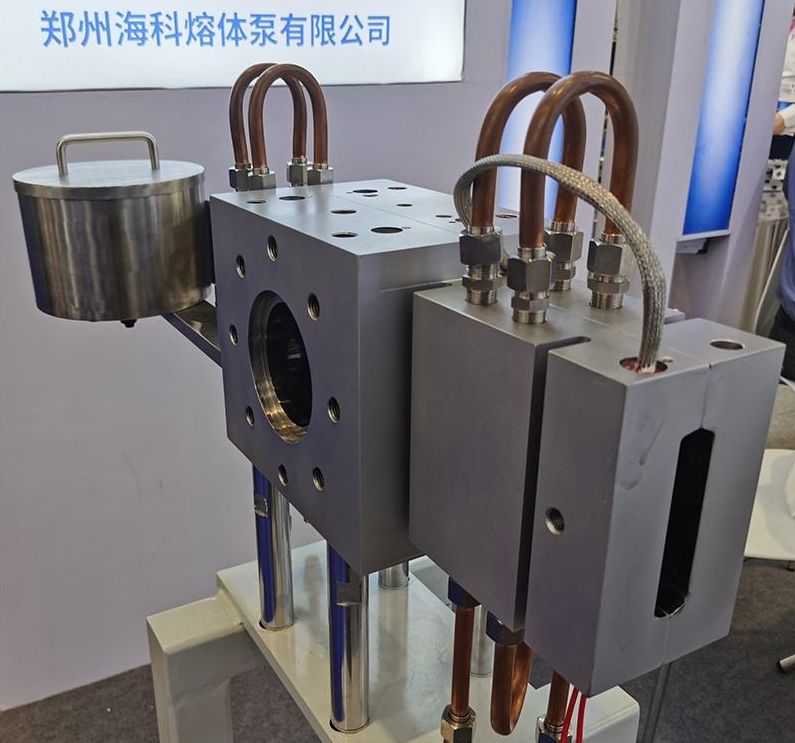
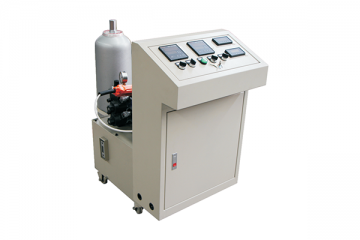
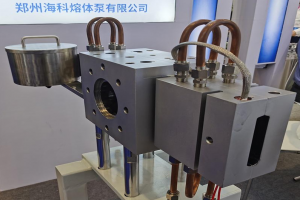
To view a screen changer merely as a “filter screen” is to underestimate its engineering value. From a system perspective, it serves three core functions:
Melt Purifier: This is its most fundamental function. It intercepts non-plastic impurities, unplasticized particles, and agglomerated additives found in aged or recycled materials generated during production, preventing them from entering the downstream die and causing product defects.
Pressure Stabilizer: As material passes through the filter screen, a pressure drop (or pressure rise) occurs. A well-designed screen changer, especially a continuous-type model, can minimize system pressure fluctuations during screen changes, providing stable process conditions for downstream operations. This is key to ensuring uniform film thickness and fiber denier.
Guardian of Production Continuity: Through dual-station or multi-station designs, online screen changes without production downtime are achieved. While one station’s screen is in operation, the other can be preheating, cleaning, or standing by; production remains uninterrupted during switching. This is crucial for modern production lines that prioritize efficiency and continuity.
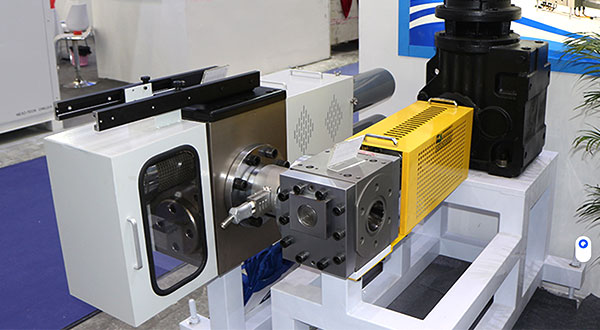
The selection and use of screen changers must be closely aligned with material characteristics:
General-purpose plastics (PE/PP): These are the most widely used. However, when color masterbatches, fillers, or recycled materials are added during production, the impurity content increases, requiring the selection of an appropriate filtration area and screen-changing frequency based on the impurity load.
Engineering plastics (PET/PA): Commonly used in synthetic fibers and high-end films. Material temperatures are high (280–300°C), requiring high thermal stability; furthermore, the process demands extreme stability, necessitating the use of continuous screen changers with minimal pressure fluctuations.
Highly filled materials (e.g., calcium carbonate-filled PP): The filler itself acts as an “impurity,” causing screens to clog extremely quickly. A screen changer with a large filtration area or a backflush function is required to reduce screen change frequency.
Highly filled materials (e.g., calcium carbonate-filled PP): The filler itself acts as an “impurity,” causing screens to clog extremely quickly. A screen changer with a large filtration area or a backflush function is required to reduce screen change frequency.
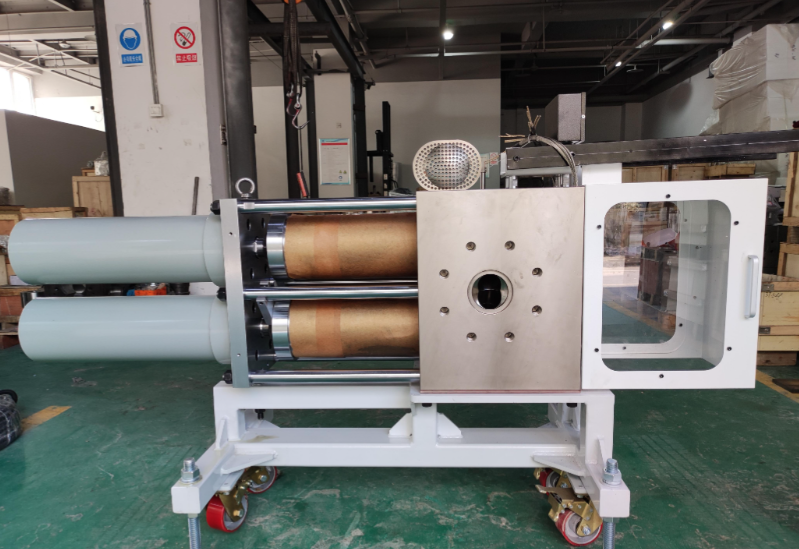
virtually any extrusion or polymerization line where there is a risk of impurities or a requirement for pressure stability needs a screen changer. The dirtier the material and the more precise the process, the higher the demands on the screen changer’s continuity, filtration area, and pressure stability.