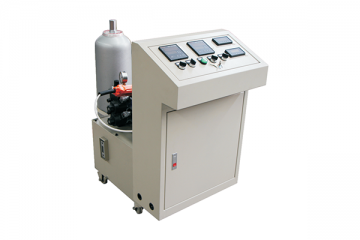
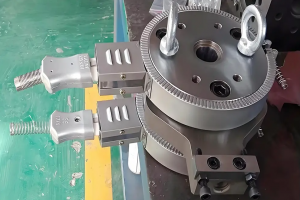
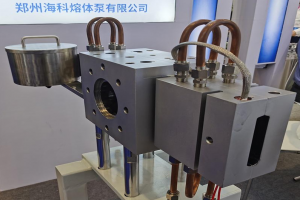
1. Downtime Duration for a Single Screen Change with a Manual Screen Changer
The total downtime for a complete screen change cycle (including deceleration and pressure relief, plate removal and screen replacement, and pressure restoration) with a manual screen changer is 3–8 minutes. If a pre-installed spare slide plate is used for a complete replacement, the downtime can be reduced to 2–3 minutes, significantly shortening production downtime.
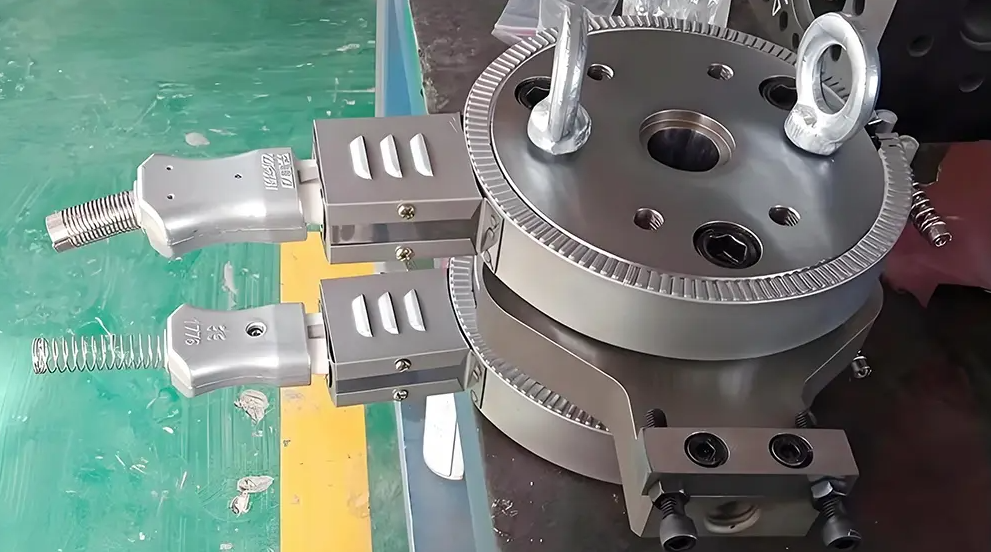
2. Selection of Rated Operating Pressure for Manual Screen Changers
The standard rated operating pressures for manual screen changers are 20 MPa, 25 MPa, 30 MPa, and 35 MPa. For the vast majority of standard extrusion applications, a rated pressure of 25 MPa is sufficient to meet production requirements. When selecting a model, the principle of safety margin must be followed to ensure that the equipment’s rated pressure exceeds the actual maximum operating pressure by 20%–30%, thereby ensuring long-term stable operation.
3. Key Differences Between Manual and Hydraulic Screen Changers
The core distinction between the two lies in their screen-changing modes: Manual screen changers require the machine to be shut down to complete screen changes, making them suitable for production lines with low screen-changing frequencies; hydraulic screen changers enable continuous screen changes without stopping the machine, making them suitable for continuous production lines with high screen-changing frequencies where downtime is not permitted.
Performance and Cost Considerations: Manual screen changers offer the advantages of lower purchase costs, lower failure rates, and lower operational and maintenance costs; hydraulic screen changers have higher purchase costs but provide superior screen-changing efficiency and production continuity. The two are not mutually exclusive; the appropriate type should be selected based on the production line’s operating conditions and production rhythm.
4. Filter Replacement Intervals for Manual Screen Changers
Filter replacement intervals are determined by both material cleanliness and mesh count: When processing clean virgin materials such as PP/PE, the replacement interval for 40–80 mesh screens is 8–24 hours; when processing recycled materials with high impurity content, the replacement interval is reduced to 2–4 hours.
Industry-standard guideline: Using the die head pressure immediately after a screen change as the baseline, if the die head pressure rises by 20%–30% above this baseline, the screen must be replaced promptly to prevent abnormal pressure from affecting product quality and equipment safety.
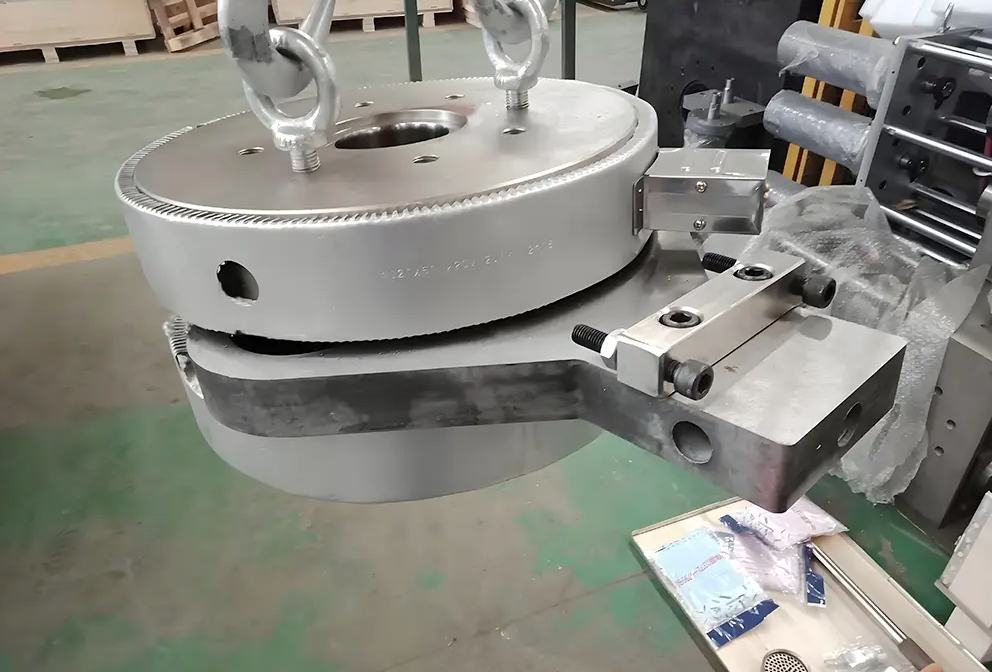
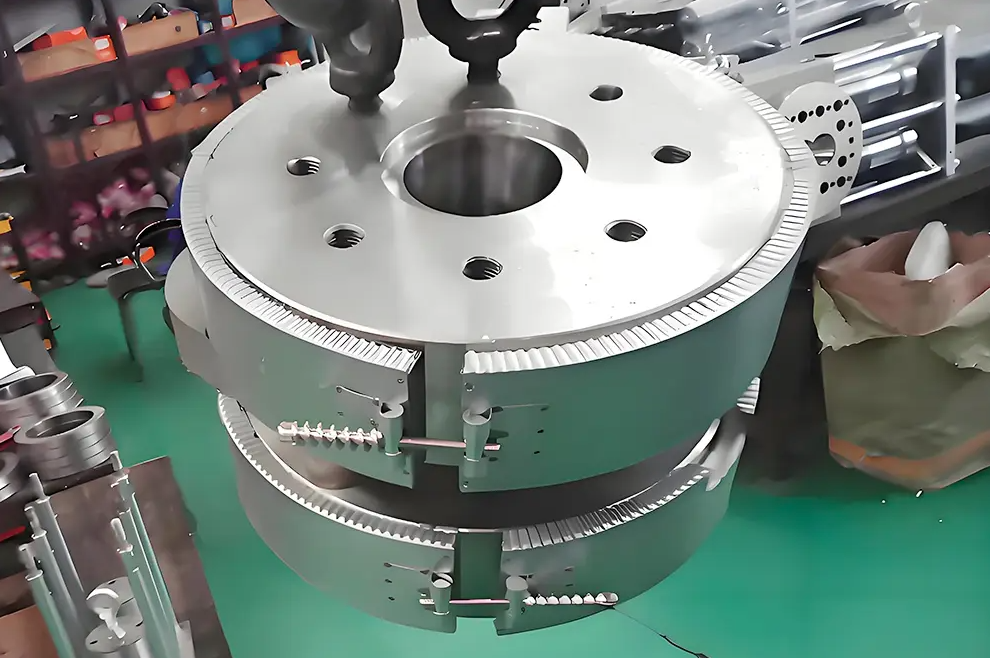
Manual screen changers are the most structurally simple, widely used, and cost-effective core category among screen-changing equipment for extruders. They are the optimal solution for small-to-medium-sized extrusion lines with a daily output of less than 3 tons that process clean virgin materials and have low screen-changing frequencies.
When selecting a manual screen changer, three key parameters must be prioritized: sufficient filtration area, slide plate material hardness meeting standards, and a scientifically sound flow channel design. When these three parameters are precisely matched, the manual screen changer can achieve a stable service life of 8–10 years, providing reliable melt filtration for the production line.