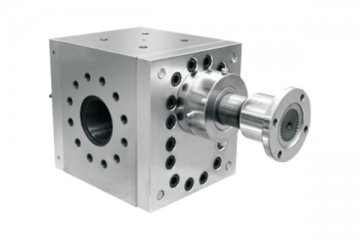
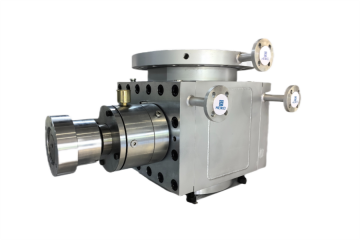
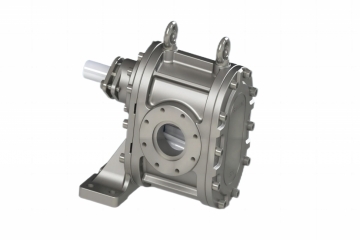
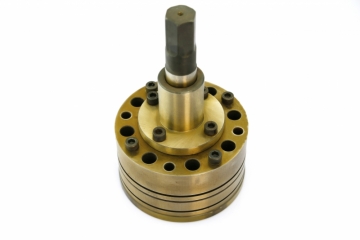
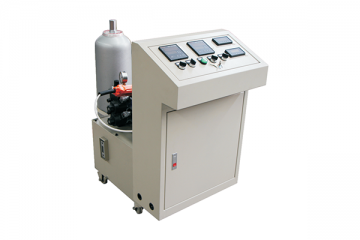
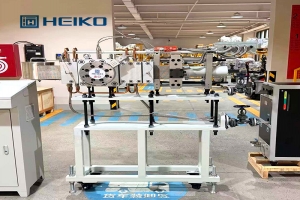
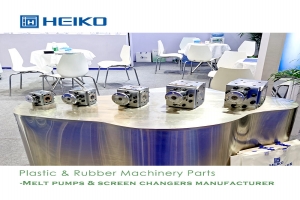
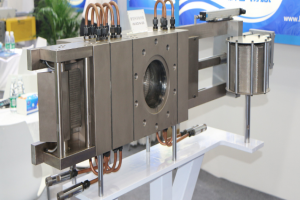
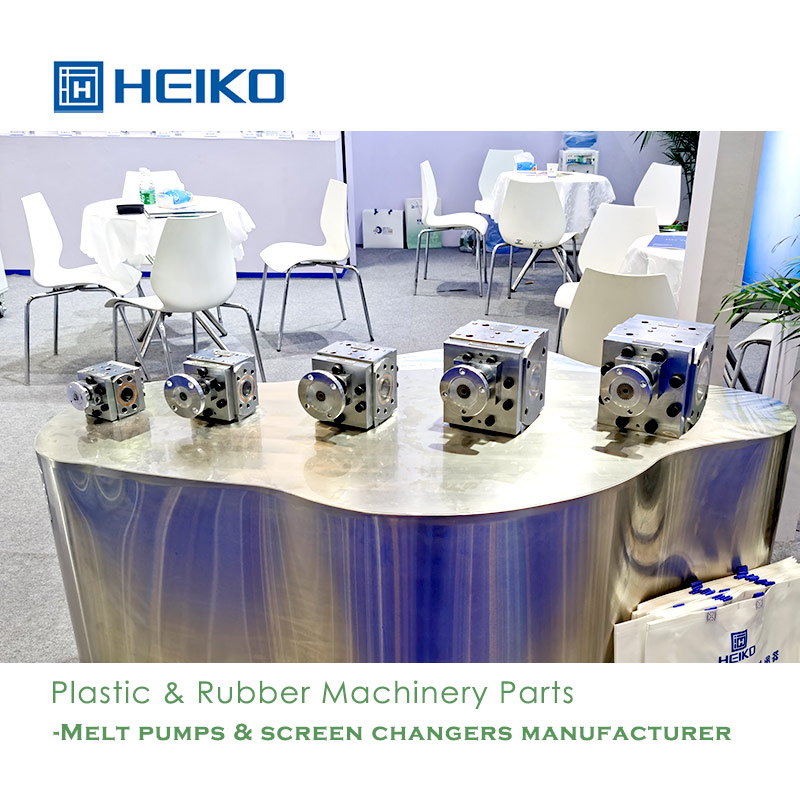
A melt pump is a specialized industrial conveying, pressurizing, and metering device designed for high-temperature, high-viscosity polymer applications. It is typically installed between an extruder and a die. By using gears to forcibly convey the melt, it stabilizes melt pressure and significantly improves the precision of product molding. Widely used in various extrusion production lines across the plastics, rubber, and synthetic fiber industries—including pelletizing, film, and pipe manufacturing—it offers multiple benefits such as reduced energy consumption, minimized waste, and improved product quality.
II. Working Principle
A melt pump is a positive-displacement conveying device that relies primarily on a pair of precision-meshed gears to achieve metered melt delivery. The complete process consists of three steps: feeding, conveying, and discharge:
Feeding stage: As the gears rotate, the volume of the gear pockets gradually expands, continuously drawing in high-temperature molten material;
Conveyance Stage: The melt is contained within the space between the gear teeth and the pump casing and is smoothly conveyed to the discharge side as the gears rotate;
Discharge Stage: The intermeshing gear teeth compress the material, causing the chamber volume to contract and forcing the melt out under high pressure. The output flow rate is linearly proportional to the gear speed, ensuring high controllability of metering.
III. Core Structural Components
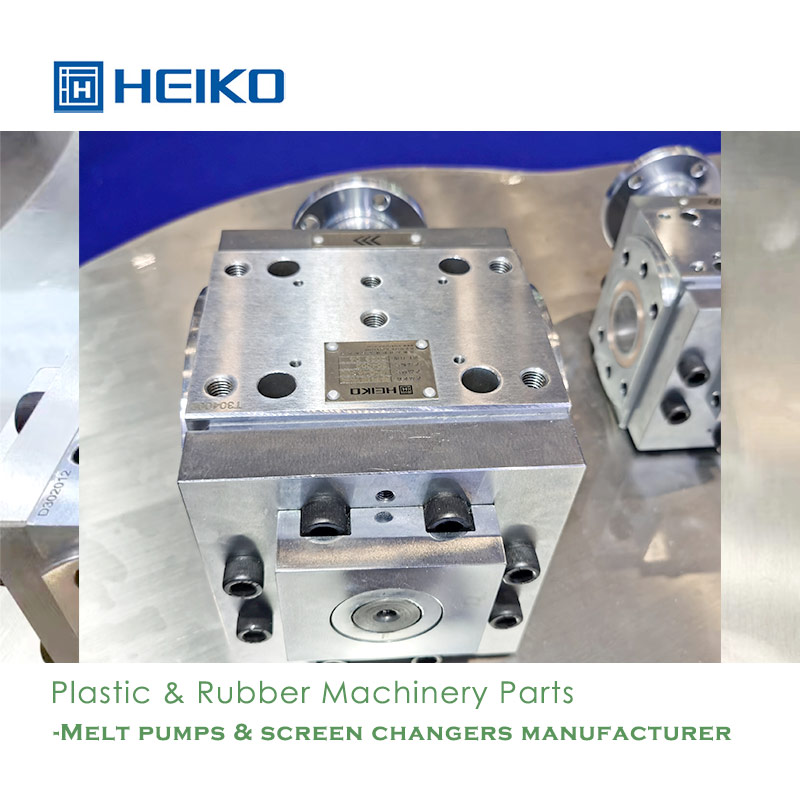
The complete unit primarily consists of the pump body, drive gear, driven gear, sliding bearings, shaft seal assembly, and constant-temperature heating system:
Gear Structure: The mainstream types are straight-tooth, helical-tooth, and herringbone-tooth gears; helical gears are preferred for high-pressure extrusion applications, as they effectively reduce pressure pulsations in melt conveyance;
Sealing System: Equipped with various sealing configurations—including spiral seals, packing seals, and mechanical seals—to prevent leakage of high-temperature melt;
Constant-Temperature Heating System: Supports both electric heating and thermal oil heating, maintaining the material in a molten state throughout the process to prevent the melt from cooling, solidifying, and blocking the chamber.
IV. Core Advantages of the Production Line
1. Stable Pressure and Flow for Improved Product Precision
By isolating pressure fluctuations generated by the extruder screw, the system ensures a continuous and stable melt pressure entering the die. This completely eliminates flow pulsations caused by screw operation, resolving issues such as uneven film thickness and dimensional deviations in pipes, and significantly reducing dimensional tolerances in finished products. At the same time, it offers excellent metering accuracy, making it suitable for all precision extruded products with high standards for weight and dimensional accuracy.
2. Energy Savings and Efficiency Gains, Reducing Production Costs
By transferring the melt pressurization process from the extruder to the melt pump, the main extruder can operate stably under low-pressure and low-temperature conditions, reducing energy consumption per unit of material processed by approximately 25%. With the reduced load on the main unit, production speed can be increased, leading to a simultaneous rise in output capacity while significantly reducing molding defects and effectively lowering scrap rates.
3. Protects the Extruder and Extends Equipment Service Life
By sharing the axial load on the extrusion screw, it reduces friction wear between the screw and the barrel, slows down wear and aging of the extruder, extends the service life of the entire extrusion system, and lowers equipment maintenance and replacement costs.